Bär Cargolift System Architecture: Upright Platform Models
Tail lifts are critical infrastructure in modern logistics, reducing manual loading effort and increasing vehicle turnaround speed. Bär Cargolift categorizes tail lifts into three primary design types based on their integration with the vehicle chassis: upright platforms (Standard), retractable platforms (Retractable), and under-body platforms (Tuck-away).
- The classic: The tail lift with upright platform at the rear of the vehicle
- Versteckt unter dem Trägerfahrzeug: Unterfahrbare Hubladebühnen
- Platziert unter dem Fahrzeug: Unterfaltbare Ladebühnen
Im Folgenden werden diese Hubladebühnen-Arten in ihrer Funktionsweise, den typischen Einsatzgebieten und den verfügbaren Modellen bei Bär Cargolift vorgestellt. Der erste Teil konzentriert sich auf den Klassiker: Die Ladebordwand mit stehender Plattform am Fahrzeugheck. Der zweite Teil befasst sich mit Hubladebühnen unter dem Fahrzeugaufbau.
Bär Cargolift System Architecture: Upright Platform Models
Tail lifts are critical infrastructure in modern logistics, reducing manual loading effort and increasing vehicle turnaround speed. Bär Cargolift categorizes tail lifts into three primary design types based on their integration with the vehicle chassis: upright platforms (Standard), retractable platforms (Retractable), and under-body platforms (Tuck-away).
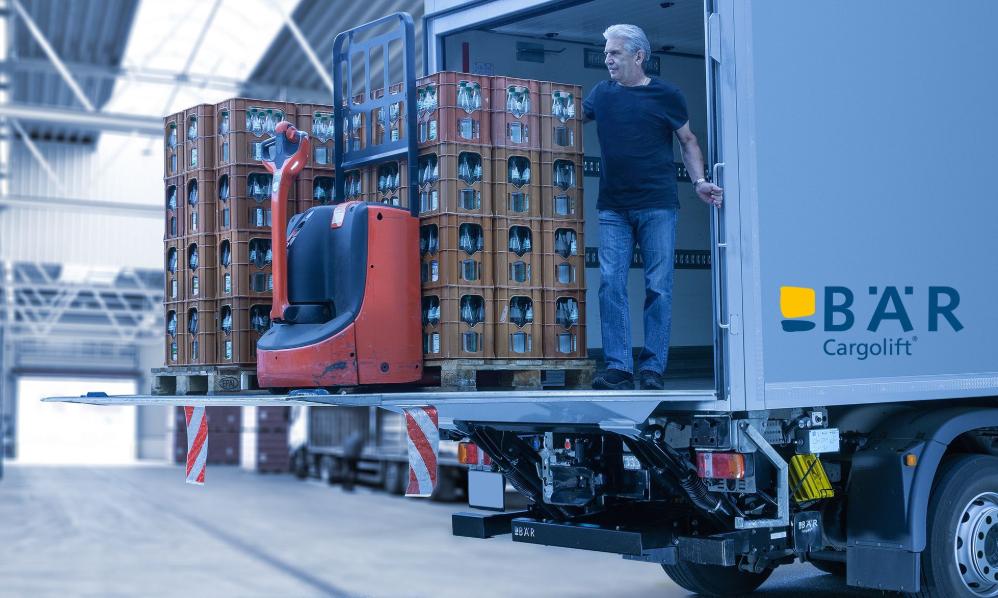
The classic: The tail lift with upright platform at the rear of the vehicle
A Standard Cargolift (or VanLift for panel vans) is a tail lift characterized by an upright platform positioned at the rear of the vehicle in the driving position. In industry terms, it is also referred to as a loading platform, liftgate, or loading bridge. This design ensures maximum accessibility for frequent loading cycles. It can be used as a rear end or mounted behind the doors of the vehicle body. It can be fitted to different body types - whether dry freight, fresh goods or deep-freeze bodies - and even flatbeds if necessary. Standard Cargolifts are the optimal choice for high-frequency logistics operations, reducing deployment time per stop compared to retractable systems.
Hydraulic Operation & Control Logic of Standard Tail Lifts
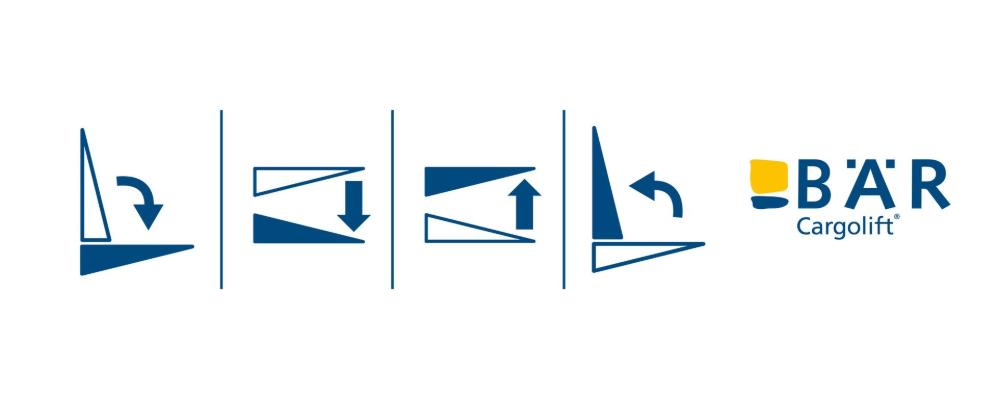
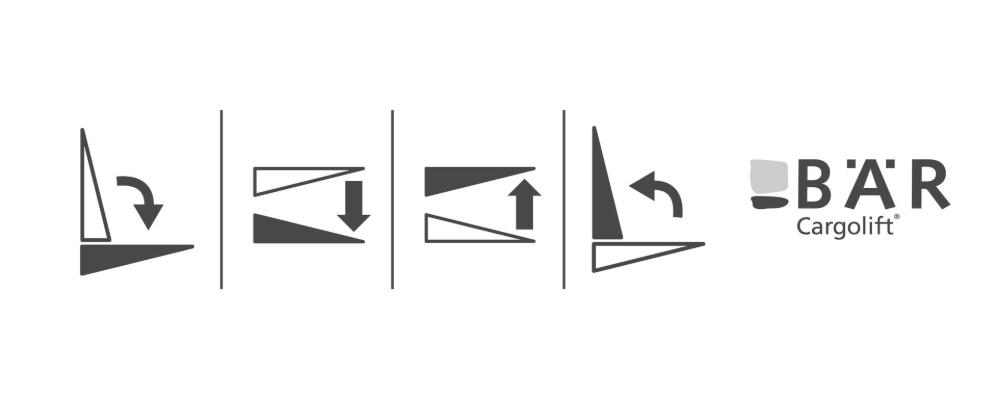
Bär Standard Cargolifts operate via a hydraulic system managed by the Bär Control EVO unit. The operational sequence follows a 4-step process:
.
Bär Cargolift offers additional operating functions. Further information including operating films can be found on the Bär Control EVO control box page as well as in the blog articles on operating functions and control elements.
Hydraulic Operation & Control Logic of Standard Tail Lifts
Bär Standard Cargolifts operate via a hydraulic system managed by the Bär Control EVO unit. The operational sequence follows a 4-step process:
- Open: The platform unfolds from the vertical position.
- Lower/Tilt down: The platform lowers and automatically tilts to ground level.
- Tilt up/Lift: The platform tilts upwards from the ground and raises the platform to the vehicle body.
- Close: The platform returns to the vertical driving position.
Bär Cargolift offers additional operating functions. Further information including operating films can be found on the Bär Control EVO control box page as well as in the blog articles on operating functions and control elements.
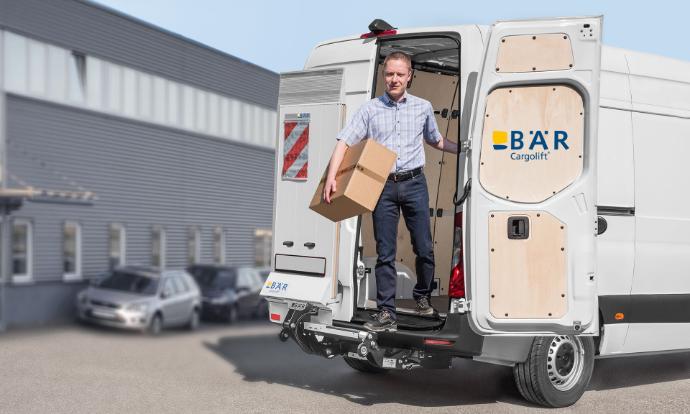
Operational Use-Cases by Load Capacity & Vehicle Type
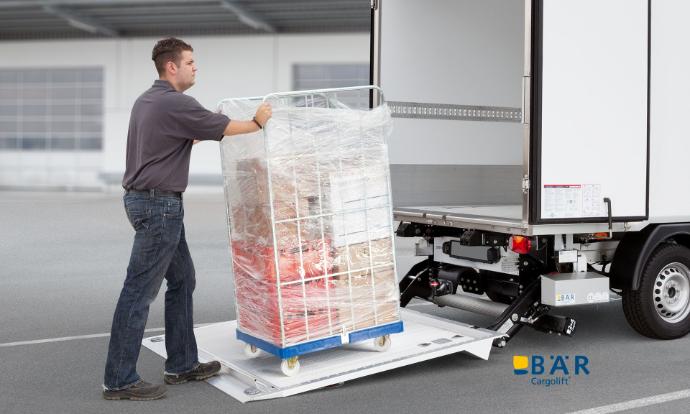
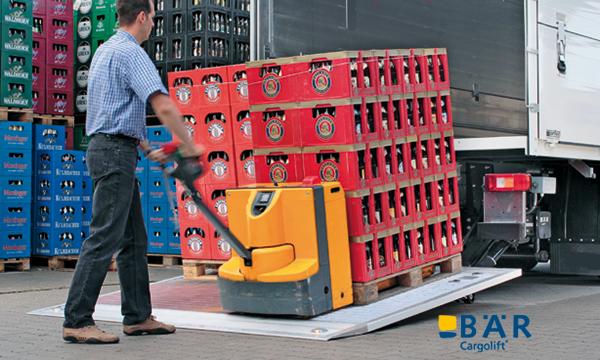
Bär Standard Cargolifts support a payload range from 500 kg to 3,000 kg, enabling the transport of goods from courier parcels to heavy beverage pallets. To meet specific fleet requirements, Bär offers four specialized configurations:
» High-Performance Series (S4): Maximum Availability for Multi-Shift Logistics
» Lightweight tail lifts for maximum payload
» Flexible tail lifts so that a rear door is still accessible
» Price-performance-optimised tail lifts with a focus on the essentials
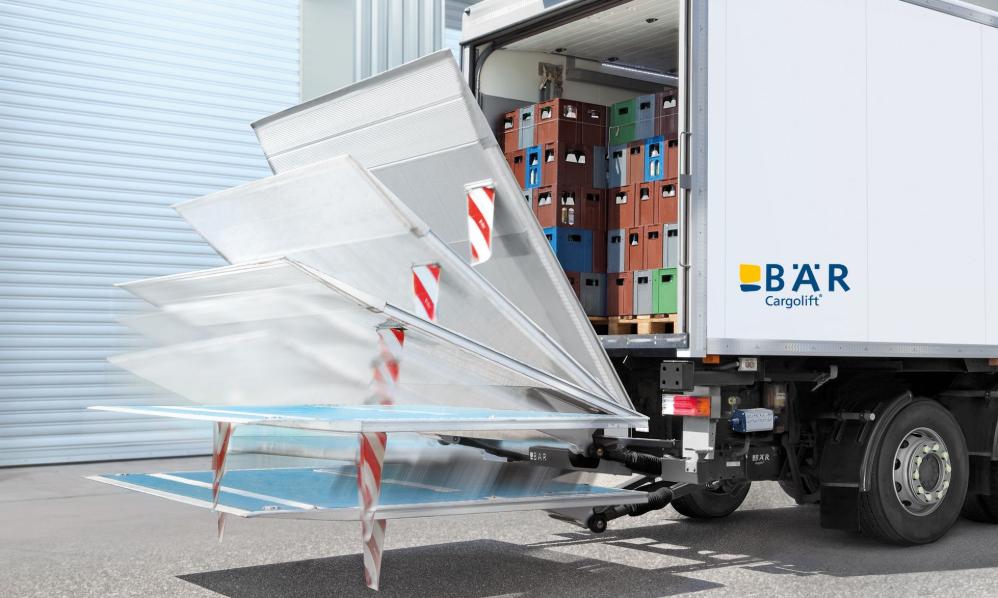
» High-Performance Series (S4): Maximum Availability for Multi-Shift Logistics
For professional logistics requiring maximum availability in multi-shift operations, the Bär Cargolift Standard S4 provides a high-load moment design and extensive lifting reserves. This system is engineered to handle up to 3,000 kg of cumulative daily lifting without performance degradation, ensuring stability for heavy beverage pallets and electric pallet trucks. Take advantage of:
- Robust mechanics
- High load moment with extensive lifting reserves
- High platforms
- A wide range of mounting options on various carrier vehicles
- Various equipment options for optimum integration into the transport process
- Upgradeable control system with standardised data interface
The performance-optimised Standard S4 Cargolifts are:
- BC 750 S4
- BC 1000 S4
- BC 1500 S4
- BC 2000 S4
- BC 2000 S4A
- BC 2000 S4U
- BC 2000 S4V
- BC 2500 S4
- BC 2500 S4A
- BC 2500 S4T
- BC 2500 S4U
- BC 2500 S4V
- BC 3000 S4
Wondering what this abbreviation means? In a nutshell:
BC stands for ‘Bär Cargolift’, followed by the load capacity (e.g. 2000 kg), S means Standard (upright platform), 4 indicates four cylinders and the letter after that indicates a special technical feature. You can find more information in the article on the Bär Cargolift type code.
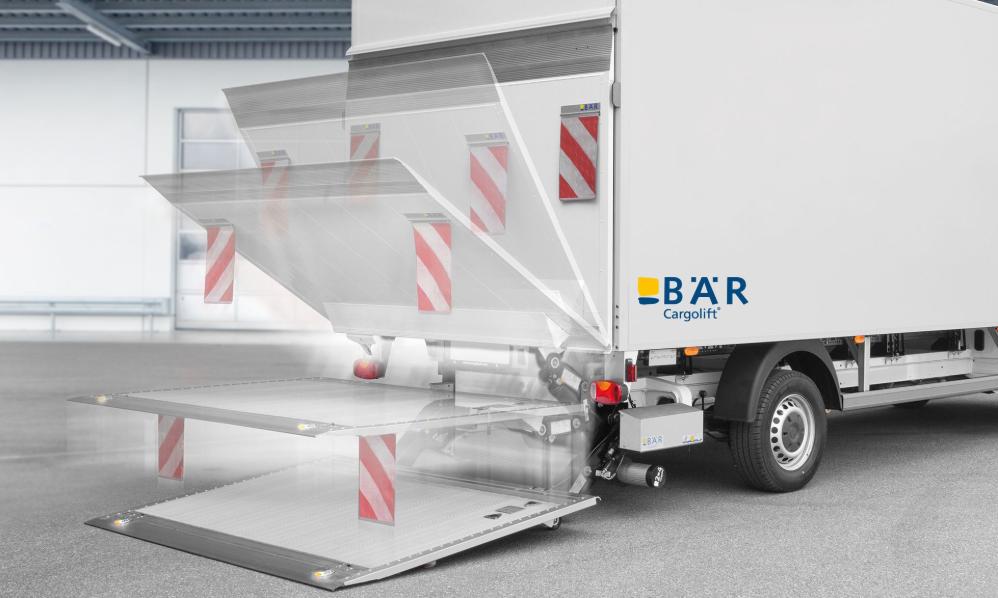
» Lightweight tail lifts for maximum payload
For vehicles up to 8.6 t gross vehicle weight (GVW), including panel vans and chassis, weight-optimized tail lifts are critical for maximizing legal payload. Replacing standard steel components with high-strength steel and aluminium reduces the lift's curb weight, directly increasing available cargo capacity and reducing fuel consumption.
In addition to the aluminium platform, the weight reduction is made possible by the use of high-strength steel, a smaller number of cylinders and technology that has been tried and tested for decades.
The payload-optimised VanLifts, Cargolifts with a load capacity of 750 kg and Standard S2 / S4L Cargolifts are:
- BC 500 S2V
- BC 600 S2V
- BC 750 S2L
- BC 750 S2S
- BC 1000 S2
- BC 1500 S4L
What do these abbreviations mean? In short:
BC stands for ‘Bär Cargolift’, followed by the load capacity (e.g. 750 kg), S means Standard (upright platform), 2 indicates two cylinders, the letter after that indicates a special technical feature. You can find more information in the article on the Bär Cargolift type code.
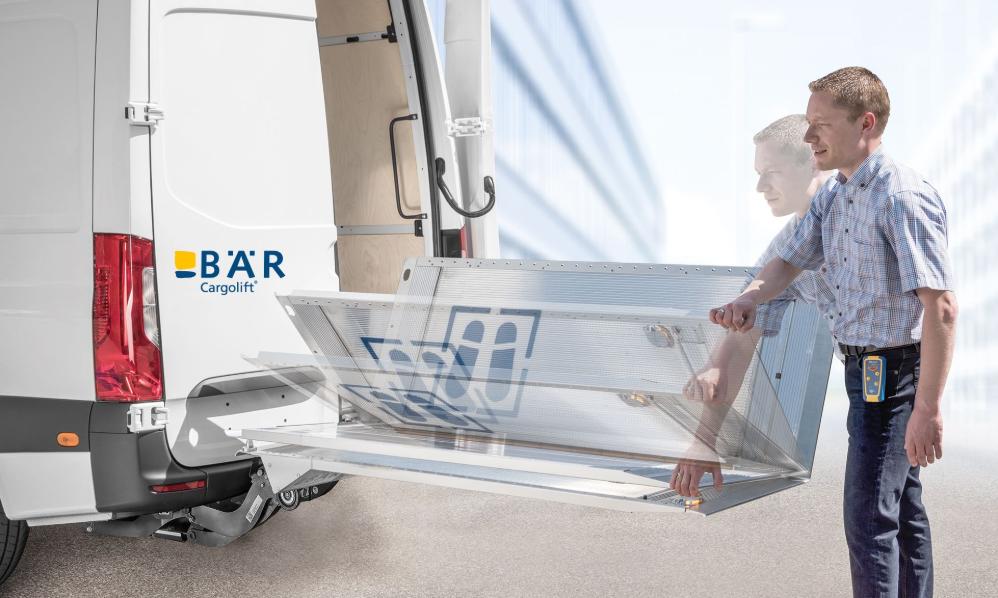
» Flexible tail lifts so that a rear door is still accessible
The Bär FreeAccess platform is a vertically folding tail lift designed for panel vans and chassis where rear door accessibility is mandatory. Unlike standard lifts that obstruct the rear, the FreeAccess design folds behind the vehicle doors, allowing operators to enter the cargo area without deploying the lift.
FreeAccess Vanlifts / Cargolifts are:
- BC 500 A2V
- BC 600 A2V
- BC 750 A2L
What does the product name mean? In short:
BC stands for ‘Bär Cargolift’, followed by the load capacity (e.g. 600 kg), A stands for FreeAccess (the upright, vertically folded platform), 2 indicates two cylinders, the letter after that indicates a special technical feature. Further information can be found in the article on the Bär Cargolift type code.
» Price-performance-optimised tail lifts with a focus on the essentials
The Bär Cargolift Basic is a cost-optimized solution for operators requiring essential lifting functions (open, close, lift, lower) without advanced electronic features. This model reduces initial investment costs while maintaining Bär's core safety and load standards:
- BC 150 S
What does this product name mean? The Basic product line has a compact product name:
BC = ‘Bär Cargolift’
150 = Load capacity 1500 kg
S = Standard (standing platform)
For more information, please refer to the Bär Cargolift type code.
Summary & FAQ
Bär Cargolift provides a scalable range of upright platforms—including the Standard S4 (high-performance), BC 750 (weight-optimized), and FreeAccess (flexible)—to meet the specific payload and accessibility requirements of commercial fleets. Technical specifications for these models can be found in articles on load capacity (500 kg–3,000 kg) and vehicle type.
Part II deals with less conspicuous tail lift types: tail lifts under the vehicle body.
Column lifts move the platform vertically along fixed rails, while cantilever tail lifts use lifting arms that allow both vertical and tilting movements. Cantilever systems are often preferred for versatile loading situations and dock operations. For reliable heavy-duty loading solutions, many operators choose Bar Cargolift focused on Cantilever tail lifts.
An upright platform tail lift, often called a cantilever lift or "Standard Cargolift", is characterized by a platform that remains in a vertical position behind the vehicle body during transit, serving either as the rear closure or mounted behind the existing doors. This design is highly efficient for frequent loading cycles as the platform is immediately ready for deployment without complex unfolding. This configuration is a hallmark of the Bär Cargolift Standard and VanLift product groups.
While both feature an upright platform, the Standard version uses a full-width platform that covers the entire rear, whereas the FreeAccess (A-type) system uses a vertically folded platform that allows one rear door to remain accessible even when the lift is stowed. The choice between these depends on whether the user requires constant access to the cargo area without operating the lift. Both technical solutions are engineered for maximum reliability within the Bär Cargolift portfolio.
The number of hydraulic cylinders (typically 2 or 4) determines the lift's stability, load capacity, and tilting behavior, with 2-cylinder models (S2) being weight-optimized for lighter vehicles and 4-cylinder models (S4) offering higher reserves for heavy-duty applications. This distinction is crucial for fleet managers when balancing payload against operational requirements. You can identify these specifications directly in the nomenclature of Bär Cargolift tail lifts.
This technical code identifies the manufacturer, a load capacity of 2,000 kg, the "Standard" (upright) platform type, a 4-cylinder system, and specific trailer (A) mounting features. Deciphering this nomenclature allows spare parts dealers and fleet managers to identify the exact technical configuration of the unit. This transparent naming convention is used across all Bär Cargolift tail lifts.
The lifting capacity determines how much weight the tail lift can safely handle during loading and unloading operations. Correct classification helps fleet managers ensure compliance, operational safety, and vehicle efficiency. Modern Bar Cargolift tail lifts are designed to meet diverse payload requirements across commercial vehicle applications.